
Win Rate 19% to 27%: The Mask-the-Logo Test That Did It
Four CDP companies, one voice, zero differentiation. A $37M ARR revenue intelligence company sat at 19% competitive win rate until a single rewrite that named Gong and Clari moved them to 27% in two quarters. The mask-the-logo test, the skeptic test, and the compression test that get you there.
Emily Ellis · 2026-03-23
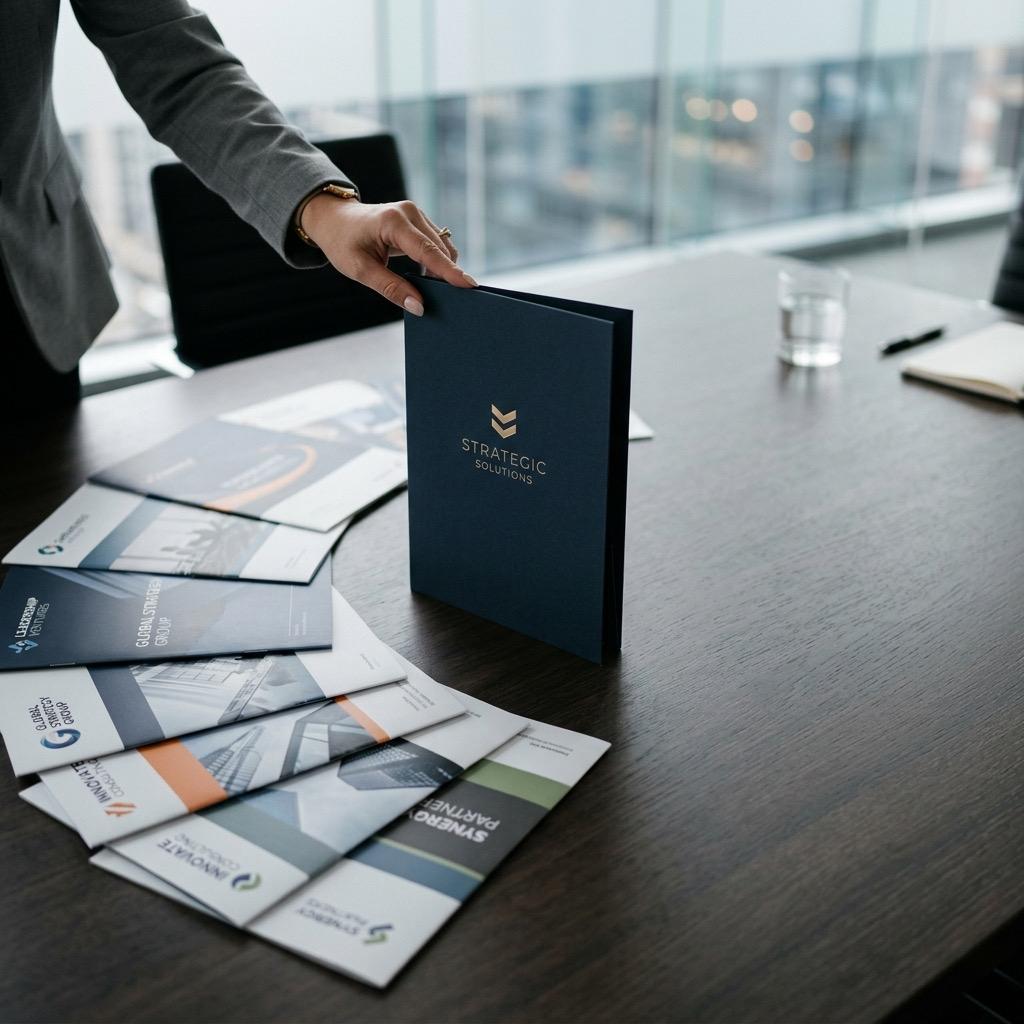
A VP of marketing at a $43M ARR customer data platform sent me three competitor home pages last month and her own. The headlines read: "The customer data platform for modern marketers." "Built for marketers who want to move faster." "The modern customer data platform for growth teams." And hers: "The customer data platform that actually moves the needle." Four companies. One voice. Zero differentiation.
If the logos were swapped, no buyer would notice. That's the test almost no B2B SaaS company passes. The language is generic because the strategy behind it is generic, or because the strategy is sharp but the writing defaulted to category cliches. Either way, the differentiation page stops doing its job the moment a buyer clicks away to compare.
What's at Stake
Differentiation shows up in pipeline velocity and win rates. Buyers moving through a competitive evaluation read three to five vendor sites in a single sitting. When those sites say the same things in the same ways, the buyer defaults to price, brand recognition, or existing vendor relationships. Your differentiation page is where you either earn a second look or quietly lose the deal.
The financial cost of undifferentiated messaging compounds quickly. A $43M ARR company with a 24% win rate running against competitors with sharper messaging might move to 30% to 33% win rates with a rewrite, without any product changes. On $130M in annual pipeline, that's $7.8M to $11.7M in incremental closed revenue annually. The rewrite itself usually costs $80K to $200K in internal and external work. The return is visible in one to two quarters.
The perception impact matters too. Analysts, press, and potential acquirers read differentiation language as a signal of strategic maturity. Language that sounds like every competitor reads as a team that hasn't made hard choices about where to win. That signal travels.
How to Work the Problem
Step 1: The mask-the-logo test
Copy the differentiation section from your site. Then copy the same section from your three closest competitors. Remove every logo, product name, and brand reference. Print them side by side. Ask five people on your team, and three friendly buyers, to guess which is yours.
If fewer than seven out of eight can pick yours out, the differentiation isn't doing work. The writing might be polished. The claims might be true. The language is still interchangeable.
Step 2: The skeptic test
Read each differentiation claim out loud and imagine a skeptical buyer asking "prove it" after every sentence. "Faster time to value" triggers "prove it" instantly and has nothing to back it up. "Ingests from 400 sources and unifies identities in under 90 seconds without custom SQL" is specific enough to defend or disprove. The skeptic test kills every claim that can't be demonstrated with data, a demo, or a named customer outcome.
Run this test on every bullet in your differentiation section. Cut or rewrite anything that doesn't survive. What remains will be materially shorter and materially stronger.
Step 3: The compression test
Compress your entire differentiation story into one sentence that names what you do, who you do it for, and what's unique about how you do it. If the compression is possible in under 25 words, the differentiation is sharp. If it takes three paragraphs to capture, the differentiation is diffuse.
The compression test also reveals overlap. When you try to compress and find your sentence sounds like a competitor's sentence, the underlying differentiation is weaker than your marketing suggests. Sharpen the mechanism or narrow the buyer.
The Common Mistake
A $37M ARR revenue intelligence company ran a differentiation page for two years with this structure: "The only revenue intelligence platform built for modern revenue teams. Faster insights. Better forecasting. More pipeline coverage." Competitors across the category used almost identical language with slightly different adjectives.
Win rates sat at 19% in competitive deals. Sales reps reported that buyers couldn't articulate a reason to pick them over Gong or Clari by the end of the evaluation. The team rebuilt differentiation around the one thing the product actually did uniquely: it combined sales call recordings with deal-level CRM changes in a single timeline, where competitors treated those as separate modules.
The rewrite: "See every sales call and every deal change for an opportunity on one timeline. Gong shows you the calls. Clari shows you the forecast. Only [Company] shows you how the calls moved the deal."
That rewrite names competitors. States the unique mechanism. Asserts a specific claim a buyer can verify in a demo. Win rates moved from 19% to 27% over the following two quarters. The product hadn't changed. The sales team finally had a differentiation story that could survive comparison.
Before: "The only revenue intelligence platform built for modern revenue teams. Faster insights. Better forecasting."
After: "See every sales call and every deal change for an opportunity on one timeline. Gong shows you the calls. Clari shows you the forecast. Only we show you how the calls moved the deal."
Same market. Same product. Different commercial effect.
Immediate Steps
Run the mask-the-logo test on your current differentiation section this week. Apply the skeptic test to every claim and cut anything that fails "prove it." Compress your differentiation into a single sentence under 25 words and check for overlap with competitors. Rewrite at least one section to replace outcome claims with specific mechanism claims. Name the one or two competitors you replace and state what you do that they structurally can't.
If your differentiation page reads like every competitor's, the buyer defaults to price or brand. Neither is where you want to compete. Start your free pricing assessment to see how your differentiation holds up.
Company names and figures in worked examples are illustrative or changed to protect client confidentiality.
Talk this through with an operator, or score your own commercial system first.