
22% Discount, 41% Win Rate. Five Moves That Hold Price.
Customers acquired above 15% off list renew 8-12 points lower than list-price customers, $3M a year on a $30M ARR book. One mid-market team trained on value selling moved win rate from 41% to 54% and average discount from 22% to 13%, with new-customer churn falling from 18% to 9%.
Emily Ellis · 2025-08-11
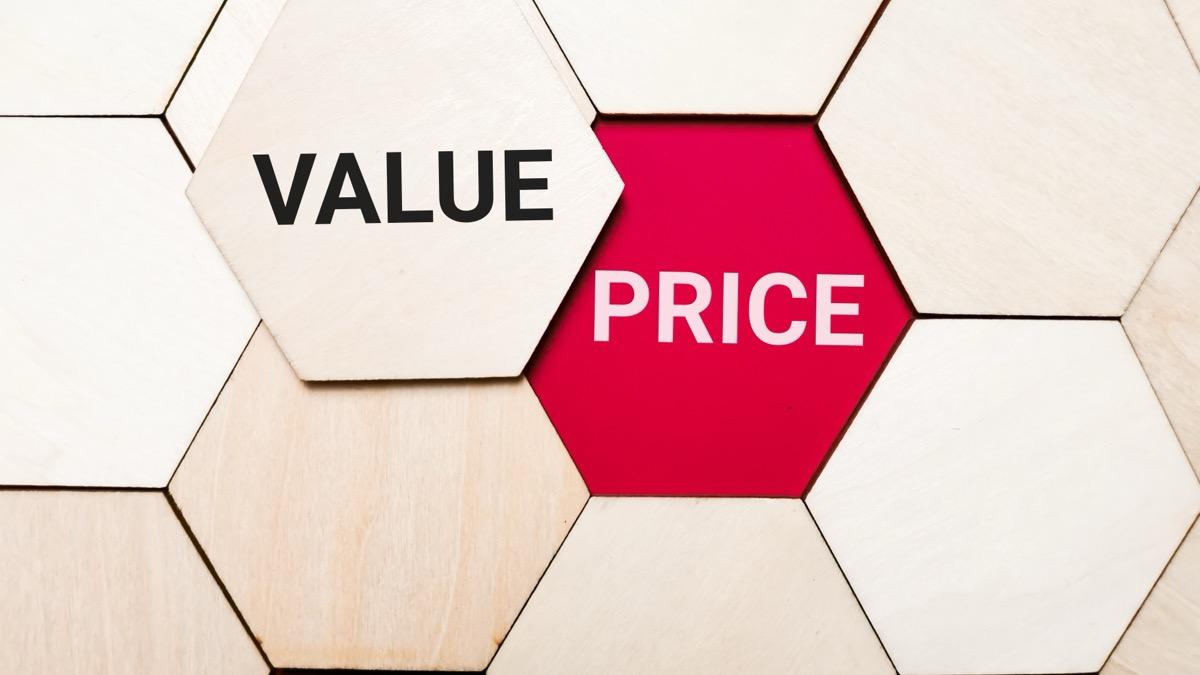
A price objection isn't a signal to lower your price. It's a signal that the value case hasn't landed yet. The reps who close the highest percentage of deals aren't the ones who discount fastest; they're the ones who know how to make the value feel worth the cost before the customer ever asks about price.
The Margin Leak
Discount-first selling compounds in ways that don't show up immediately on the revenue report. At a SaaS company running 18% average discounts, you're not just losing margin on each deal; you're creating a customer base that expects discounts, renews at discounted rates, and churns at higher rates than full-price customers.
Research on B2B software renewals consistently shows that customers acquired at discounts above 15% off list renew at rates 8-12 points lower than customers acquired near list price. On a $30M annual recurring revenue (ARR) book, a 10-point difference in gross retention rates is $3M annually. The margin you gave away to close those deals didn't buy loyalty; it bought a customer who was never fully convinced of the value.
The rep-level version of this dynamic is also worth understanding. Reps who default to discounting tend to over-discount in competitive situations where the customer was going to buy anyway, and they under-discount in situations where a better value argument was the right answer. The result is margin erosion without a corresponding improvement in win rates. Companies that adopt value based pricing find that the discipline of value selling is worth more to quota attainment than the flexibility of discount authority. When the price is anchored to what the buyer gains, the conversation shifts from cost to return.
The Path Forward
Step 1: Diagnose the real objection before you respond to the stated one.
Price objections in B2B typically fall into four categories: budget timing ("we don't have budget right now"), ROI uncertainty ("I'm not sure we'll get the value"), risk aversion ("what if it doesn't work"), and competitive comparison ("your competitor is cheaper"). Each of these requires a different response. Budget timing needs a phased rollout or creative deal structure, not a discount. ROI uncertainty needs data and a proof-of-concept, not a lower price. Risk aversion needs a success guarantee or a structured trial. Competitive comparison needs a feature-by-feature value comparison, not a race to the bottom.
Ask two questions before you respond: "What specifically makes the price feel high?" and "What would need to be true for this to feel like fair value?" The answers tell you which category you're dealing with.
Step 2: Anchor the conversation to total cost of ownership, not the contract price.
Price is what a customer pays on signing. Total cost of ownership is what the decision actually costs over 3 years when you include implementation, training, switching costs, and the opportunity cost of the problem you're not solving. For SaaS tools that replace manual processes, calculate the cost of the current approach: staff time, error rates, rework. For industrial or infrastructure products, calculate maintenance costs, reliability differences, and downtime risk. The TCO argument moves the conversation from "your product costs $X" to "your current approach costs $Y." That reframing is worth more than any discount.
Step 3: Personalize the value case to the customer's specific priorities, not your standard pitch.
Generic value propositions don't overcome price objections. A prospect who objects to price has already heard the standard pitch and didn't find it convincing enough to stop asking about price. To break through, you need to connect your product's value to the specific problem that matters most to that buyer at that moment. Ask what their top two business priorities are for the next quarter. Then show how your product directly addresses those priorities, ideally with data from a comparable customer who had the same priorities. The specificity signals that you understand their situation; the comparable customer data makes the value claim credible.
Step 4: Use trials to reduce perceived risk rather than discounts to reduce price.
When a customer's objection is fundamentally about risk ("what if it doesn't deliver the value you're promising"), a trial addresses the real concern far better than a discount does. A 14-day trial of a SaaS product with a structured success milestone is a much better close tool than a 10% price reduction. The customer gets proof before they commit. You get a customer who buys with full conviction and renews at a higher rate. Structure the trial around one specific outcome: "In 14 days, we'll demonstrate that this reduces your report preparation time by 4 hours per week. If it does, we proceed. If it doesn't, we part ways and you've learned something." That framing is hard to resist and builds a customer relationship that starts on demonstrated value.
Step 5: Reframe the relationship from vendor transaction to long-term partnership.
Price objections weaken when the customer sees you as a partner in their outcomes rather than a supplier of a product. Concrete partnership signals include: a dedicated customer success contact with a named individual and direct contact information; a quarterly business review commitment; a product roadmap conversation where you show how your development is responding to their industry's needs; and proactive usage analysis where your team flags underutilization and helps the customer get more value. None of these cost much to offer. All of them shift the mental category from "vendor I'm paying for a tool" to "partner who is invested in my success." That mental category shift changes the price sensitivity calculus.
The Wall You'll Hit
A mid-market software company's sales team was averaging a 22% discount rate. Win rate in competitive situations was 41%. The CRO's instinct was that the product was overpriced.
Before: reps responded to price objections by offering to "check with my manager on pricing" and returning with a 10-15% discount offer. About 40% of deals required at least two rounds of discounting before closing. Customers acquired this way churned at 18% annually.
After a value-selling training program that gave reps a standard ROI framework, a TCO calculator, and a library of 12 comparable customer case studies organized by industry and pain point, win rate improved to 54% in competitive situations. Average discount rate dropped from 22% to 13%. Annual churn among new customers acquired after the training fell from 18% to 9%. The combined effect on the $28M ARR base over 18 months was an improvement of roughly $1.4M in gross profit from reduced discounting, plus approximately $2.1M in retained revenue from lower churn.
Actions to Take Now
Audit your last 20 closed deals. For each one that involved a discount, identify whether the discount was given because the customer's value objection was genuinely unresolved or because the rep defaulted to discounting under negotiation pressure. That distinction tells you whether you have a value communication problem or a negotiation confidence problem. They require different fixes.
If you want a structured view of where your team's value-selling capability gaps are costing you margin and win rate, take the free assessment to surface those gaps and map them to specific improvement actions.
Company names and figures in worked examples are illustrative or changed to protect client confidentiality.
Talk this through with an operator, or score your own commercial system first.