
When Prices Feel Expensive: Understanding the Behavioral Ceiling on Pricing Power
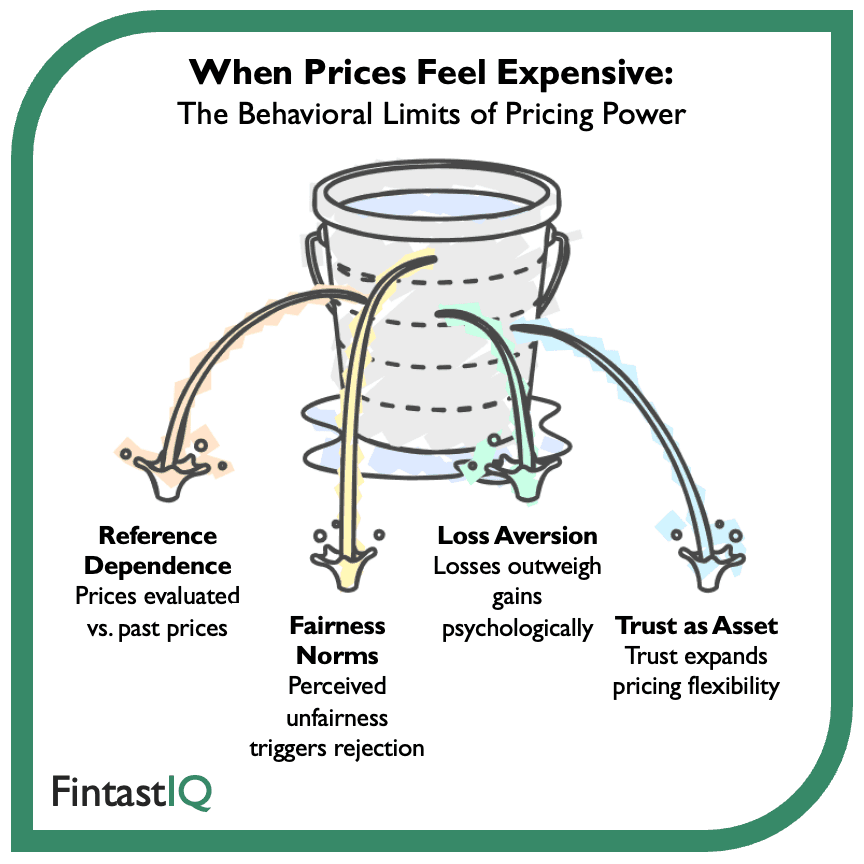
Customers don't evaluate prices rationally. Price is a signal, a social statement, and an implicit contract. When a price change violates psychological expectations, the backlash is swift and disproportionate. Four behavioral constraints shape what customers will actually accept, and models miss all of them.
Emily Ellis · 2025-11-19
In February 2024, Wendy's CEO mentioned "dynamic pricing" in an earnings call. Within 48 hours, the boycott hashtag was trending, Burger King launched a "no urge to surge" counter-campaign, and Wendy's was in full damage control with a $1 burger promotion. The price had not actually changed yet.
This is the gap pricing models miss. Customers don't evaluate prices rationally. Price is a signal, a social statement, and an implicit contract. The question isn't "what will customers pay?" It's "what will customers accept, and under what conditions?"
What It Actually Costs
Disney+ subscribers who paid $6.99 at launch don't evaluate today's $18.99 Premium tier against content value. They evaluate it against their original anchor price. The October 2025 Disney+ price increase triggered cancellation waves not because $18.99 is unreasonable, but because it represents a near-tripling from the reference price many customers still carry in their heads.
The real cost shows up in the accounts you never notice leaving. A 1 percent price increase reduces sales by roughly 1.19 percent on average, according to mental accounting research. A 1 percent pack size reduction reduces sales by only 0.56 percent. That's shrinkflation working. But when shrinkflation becomes visible, the framing flips. Dunkin's 2025 portion reductions sparked disproportionate backlash because consumers perceived dishonesty. One analyst put it: "Consumers forgive a price increase more readily than a hidden reduction, because honesty maintains equity while concealment dissolves it."
The cost of getting this wrong isn't the lost revenue on the specific price move. It's the trust deficit that compounds across every future pricing decision.
The Approach
Step 1: Map reference dependence
Customers don't evaluate prices in absolute terms. They compare them to what they paid before, what competitors charge, and what they believe they deserve. Kahneman and Tversky's prospect theory formalized this decades ago. Gains and losses are measured from a reference point, not from zero.
Before any price change, identify the three reference points your customers carry: their historical price with you, the most visible competitor price, and the anchor they associate with your category. A price that looks reasonable against one reference can look exploitative against another.
Step 2: Stress-test fairness norms
Customers reject prices they perceive as unfair, even when the economics favor them. Kahneman, Knetsch, and Thaler's 1986 research on "dual entitlement" showed that price increases traced to cost increases are typically tolerated. Price increases that appear to exploit captive customers aren't.
When Wendy's said "dynamic pricing," consumers heard "surge pricing" and reacted with moral outrage, not price sensitivity. Before any change, ask: would a skeptical customer see this as a response to costs or as extraction? If the answer isn't obviously the first, you have a fairness problem to address with communication, not just pricing.
Step 3: Account for loss aversion asymmetry
Paying more for the same thing registers as a loss. Losses hit harder than gains of equal size. This is why price increases on established products get disproportionate pushback and why honest communication matters more than clever framing.
If you must raise prices, anchor the change to something visible the customer gains. A capability, a service improvement, a capacity increase. The anchor doesn't eliminate loss aversion, but it gives the customer a narrative they can accept.
Step 4: Audit trust as a pricing asset
Trust is the accumulated expectation that a company will price consistently and fairly over time. High-trust relationships expand the acceptable range of pricing moves. Low-trust relationships contract it.
In late 2025, Australia's ACCC sued Microsoft for hiding a cheaper Microsoft 365 plan after forcing 2.7 million users into a more expensive Copilot-bundled tier. Microsoft's apology email then included broken refund links. Each misstep compounded the trust deficit. Execution failures don't just frustrate customers. They become evidence of character.
Step 5: Move incrementally and communicate rationale
Reference prices adjust gradually. A 3 percent annual increase builds a new baseline consistently. A 30 percent jump after years of stability triggers fairness alarms. Pair every change with a clear reason a skeptical customer would accept. If you can't articulate one, you have a strategy problem, not a communication problem.
Where This Breaks
The most common failure mode is confusing affordability with acceptability. Finance models say customers can pay the new price. The models are usually right about that. What they miss is that customers who can pay may still refuse to, because the change violates what they believe the relationship should be.
Backlash is about meaning, not magnitude. Customers who cancel streaming services can still afford the subscription. The issue is what the change signals about the company's intent. Same price, different intent, completely different reaction.
Priorities for the Quarter
- Identify the three reference points your customers carry for your price
- Run a fairness stress-test before any price change: would a skeptical customer accept the rationale
- Communicate every price change with concrete reasoning, not market-condition language
- Audit the full customer touchpoint journey for consistency before any pricing communication goes live
- Leave a buffer between your actual price and the maximum the market would bear
If your next price increase arrived in your customer's inbox tomorrow, what story would they tell themselves about why you raised it?
For a structured assessment to stress-test your pricing decisions before they reach customers, take the FintastIQ pricing assessment.
Company names and figures in worked examples are illustrative or changed to protect client confidentiality.
Talk this through with an operator, or score your own commercial system first.